Wednesday, December 24, 2025

What’s the Difference Between a Cyst, a Zit, and a Pimple?


At first glance, all skin breakouts may look the same. When you see a red bump on your face or body that hurts or is swollen, you probably think it's "just a pimple." But not all blemishes are the same. Some are small and go away in a few days, while others are deeply embedded in the skin and cause long-lasting pain, swelling, and even permanent scarring.

At OC MedDerm - Irvine dermatology clinic, we frequently see patients from across Orange County confused about whether their breakout is a cyst, pimple, or zit.

People often use the words "cyst," "zit," and "pimple" to mean the same thing. But they are different types of skin lesions that differ in depth, severity, cause, and suggested treatment. These differences go beyond just medical ones. Knowing what kind of breakout you have can help you treat it properly, keep it from getting worse, and stop new breakouts from forming in the same place.

We'll go over what each of these words means, how they are similar and different, and how to tell what kind of blemish you have in this section.

Are All Skin Bumps the Same?

No, not all breakouts are the same. Even though a lot of blemishes look the same on the surface, they are different in depth, severity, cause, and how they respond to treatment.

To start, let’s break down what each term actually means. 

Zit

"Zit" is a slang word. People often use it to talk about any small red bump on the skin, especially a pimple that has gotten bigger or filled with pus. Even though it doesn't have a medical definition, people often use it to talk about acne on the surface, like whiteheads or pustules.

Pimple

"Pimple" is a general term for any kind of acne lesion that happens when pores get clogged. When dead skin cells, sebum (oil), and bacteria build up in a hair follicle, they can cause pimples. Pimples can be whiteheads, blackheads, papules, pustules, or nodules. They can be different depths, looks, and how they respond to treatment.

Cyst

A cyst is a severe type of acne. When a pore gets very clogged and infected, it causes a swollen, painful lump to form under the skin. Cysts are full of pus and other inflammatory substances, and they can last for weeks or even months. Cysts are different from regular pimples or zits in that they almost always need medical attention and have a high risk of leaving scars.

Key Difference between Zit, Pimple, and Cyst

Let’s compare these breakouts directly for clarity:

FeatureZitPimpleCyst
DefinitionInformal term for inflamed blemishGeneral acne lesionDeep, infected lump under the skin
DepthSurface-levelSurface or slightly belowDeep in dermis, under multiple skin layers
Pain LevelMild or noneMild to moderateModerate to severe, often throbbing
AppearanceRed bump, whitehead, or pus-filledCan be red, white, or darkLarge, swollen lump; no head
Pus PresenceOftenOftenUsually thick pus; may not drain
Healing TimeA few daysDays to a weekWeeks or longer
Scarring RiskLowLow to moderateHigh without treatment
Treatment OptionsOTC creams, salicylic acid, spot careOTC or mild prescriptionsPrescription meds, injections, drainage

How to Identify What You Have

Knowing how these lesions act can help you avoid worsening this problem. Here's how to understand what's on your skin:

  • Is it little, red, and gone in three to five days?

You probably had a regular zit or a surface pimple. These are often caused by pores that are clogged or mild inflammation, and topical acne treatments usually work on them.

  • Is it swollen, painful, and hasn't come to a head yet?

That's a sign of a cystic lesion. When the infection goes deeper, cysts form. Unlike regular pimples, they don't usually drain. They can feel like hard or soft lumps under the skin and can take weeks to heal.

  • Does it have a white or yellow center and break easily?

This is a classic pustule, which is a type of pimple that people often call a "zit." With the right care, they may heal quickly, but If you pop them they can get infected.

Types of Pimples and How to Identify Them

A pimple isn't just one kind of skin bump. Dermatologists put pimples into groups based on how they form, whether they are inflamed, and how deeply they affect the skin. Knowing what kind of pimple you have can help you treat it better and avoid making it worse or leaving scars.

Here are the six most common types of pimples, how they look, and what they might mean about the health of your skin.

1. Whiteheads

What they are: When a pore gets clogged with oil and dead skin cells but stays closed at the surface, it becomes a whitehead or closed comedone. The bump looks white or flesh-colored because the blockage is trapped under a thin layer of skin.

What they look like: Small, round bumps that are a little raised and have a white top. They don't hurt and aren't red.

Best treatment: Whiteheads usually respond well to salicylic acid, gentle exfoliation, and non-comedogenic skin care products. Don't pick at them, because this can push bacteria deeper into the skin.

2. Blackheads

What they are: Blackheads, or open comedones, form when oil and dirt get stuck in pores. But in this case, the pore stays open to the air. The dark look isn't because of dirt; it's because of oxidation, which happens when sebum comes into contact with oxygen. 

What they look like: Flat or slightly raised dark spots that are most common on the forehead, chin, and nose.

Best treatment: The best treatment is to look for exfoliants that have glycolic acid or salicylic acid in them. Clay masks and pore strips can help loosen the plug for a short time, but long-term treatment works better.

3. Papules

What they are: Papules are inflamed pimples that form when bacteria, oil, and dead skin cells build up and break down the wall of a pore. This makes the bump red and swollen, but you can't see any pus in it.

What they look like: Bumps that are firm, red, and often tender that stick out from the skin but don't have a head.

Best treatment: Don't try to pop papules. Use topical retinoids or benzoyl peroxide instead. These are both anti-inflammatory. If your papules don't go away, you might need to use prescription creams to reduce swelling and stop scarring.

4. Pustules

What they are: When inflammation keeps going and pus builds up inside the pimple, pustules form. This is what most people think of when they hear the word "zit."

What they look like: The bottom is red and the middle is white or yellow. They can hurt, but not as much as cysts.

Best treatment: Benzoyl peroxide or sulfur spot treatments can help dry up the pus. If you keep getting pustules, a dermatologist may suggest a short course of topical antibiotics.

5. Nodules

What they are: Nodules are big, painful pimples that form deep under the skin. Nodules don't have pus in them and don't usually come to a visible head like pustules or whiteheads do. Hormonal changes or severe bacterial infections are common causes of them.

What they look like: Lumps that are hard and round and feel like marbles under the skin. They are usually red and hurt, and there is no opening on the surface.

Best treatment: Over-the-counter products don't work well on nodules, so the best treatment is usually treatment involving taking prescription oral medication or seeing a dermatologist. If you don't treat them, you are more likely to get scars.

6. Cysts

What they are: Cysts are like nodules in terms of depth and severity, but they are usually softer and have pus in them. When a pore gets clogged and infected deep in the skin, it causes a strong inflammatory response that leads to these.

What they look like: Big, red, swollen bumps under the skin. They might hurt or feel tender, and unlike pustules, they don't usually break open on their own.

Best treatment: The best way to treat cysts is to see a professional. Dermatologists can give them corticosteroids through an injection to reduce swelling, drain them in a clean way, or give them antibiotics to take by mouth. Isotretinoin may be needed for severe or recurring cystic acne.

How These Types Fit Together

People often call any breakout a "pimple" or "zit," but the six types listed above are very different in the severity they are and how they need to be treated.

Here's a quick breakdown:

Pimple TypeInflamed?Contains Pus?Depth in SkinRisk of Scarring
WhiteheadNoNoSurface (epidermis)Low
BlackheadNoNoSurfaceLow
PapuleYesNoMid-layerModerate
PustuleYesYesMid to upper layerModerate
NoduleYesNoDeep (dermis)High
CystYesYes (thick pus)Deep (dermis + subcut.)Very high

When to See a Dermatologist

Many patients in Irvine and Orange County seek treatment when painful cysts do not respond to over-the-counter acne products.

If home remedies and over-the-counter treatments aren't working for your skin, professional cystic acne treatment in Irvine can help prevent scarring and lower the emotional stress that comes with living with acne for a long time.

Consider Seeing a Dermatologist If:

  • If you often have painful, deep breakouts, you might want to see a dermatologist.
  • Your skin has scars or spots that are different colors.
  • The lesions last longer than ten to fon urteen days.
  • Products you can buy without a prescription aren't working
  • Acne is making you feel bad about yourself or getting in the way of your daily life.

Dermatologists can help with a lot of different things, like topical retinoids, antibiotics, hormonal treatments, chemical peels, light therapy, and more personalized care.

Final Thoughts

Skin breakouts are frustrating, but understanding what you are dealing with gives you the power to treat it effectively. Zits and minor pimples are often short-term and manageable. Cysts, however, are deeper, more painful, and carry a higher risk of scarring. They require a different level of care and often benefit from professional treatment.

Instead of guessing or self-diagnosing, speak with an expert who understands the differences and can help you heal your skin without making things worse.

Skin breakouts are frustrating, but understanding what you are dealing with gives you the power to treat it effectively.  Most of the time, zits and small pimples go away on their own. Cysts, on the other hand, are deeper, hurt more, and are more likely to leave scars. They need a different level of care and often do better with professional help.

Talk to a professional who knows the differences and can help you heal your skin without making things worse instead of guessing or diagnosing yourself.

Clear Skin Begins with Clarity

If you’re dealing with painful cysts or recurring acne and live in Irvine or Orange County, expert dermatologic care can prevent scarring and long-term skin damage.

At OC MedDerm (Irvine Skin) and Laser, we are committed to helping you understand your skin and restore your confidence. Whether you are dealing with a single deep cyst or ongoing acne breakouts, we create personalized treatment plans that deliver real, lasting results.

Let our team guide you with compassionate, expert care. Book your consultation today at OC MedDerm (Irvine Skin) and Laser and take the first step toward healthier, clearer, and calmer skin.

You deserve answers. You deserve results. You deserve skin that feels as good as it looks.

Frequently Asked Questions (FAQs)

What is the difference between cystic acne and a pimple?

Cystic acne and pimples differ in depth and severity.
A pimple forms near the surface of the skin when pores clog with oil and bacteria. Cystic acne develops deep beneath the skin, forming large, painful lumps that may not come to a head. In Irvine and Orange County patients, cystic acne is more likely to scar and often requires dermatologist treatment.

Are cystic acne cysts harder to treat than pimples?

Yes, cystic acne is much harder to treat than regular pimples.
Over-the-counter products often help mild acne but are usually ineffective for deep acne cysts. Cystic acne treatment in Irvine typically requires prescription medications or in-office procedures performed by a dermatologist to reduce inflammation and prevent scarring.

Can cystic acne cause permanent scars?

Yes, untreated cystic acne can cause permanent scars.
Because cysts damage deeper layers of skin, they frequently lead to pitted scars, dark spots, or uneven texture. Early treatment by a dermatologist in Orange County significantly reduces scarring risk and improves long-term skin health.

When should I see a dermatologist for acne in Irvine?

You should see a dermatologist for acne in Irvine if:

  • Acne is painful or deep
  • Cysts last longer than 10–14 days
  • Breakouts leave scars or dark marks
  • Adult acne suddenly appears
  • Over-the-counter treatments fail

Early care helps prevent permanent skin damage.

Why do adults in Orange County get cystic acne?

Adult cystic acne in Orange County is commonly caused by hormonal changes, stress, and environmental factors.
Heat, sweating, pollution, skincare products, and lifestyle changes can trigger deep acne flare-ups. Many adults benefit from seeing an adult acne dermatologist in Irvine for personalized treatment suited to California’s climate.

What is the best treatment for painful acne cysts in California?

The best treatment for painful acne cysts in California depends on severity and skin type. Options may include:

  • Prescription topical or oral medications
  • Cortisone injections for rapid relief
  • Hormonal therapy for adult acne
  • Medical-grade skincare
  • Professional acne treatment plans

A board-certified dermatologist can determi

Monday, December 15, 2025

Cosmelan MD Treatment in Irvine & Orange County | OC MedDerm

OC MedDerm in Irvine, Orange County, CA offers physician-supervised Cosmelan MD, a medical-strength depigmentation peel designed to treat stubborn skin discoloration such as melasma, sun spots, and hyperpigmentation. Under the care of board-certified dermatologist Dr. Parvin Shafa, Cosmelan MD targets excess melanin at multiple levels to deliver safer, more consistent, and longer-lasting color correction results.

Cosmelan MD is available exclusively through physicians and requires expert medical supervision for optimal outcomes and minimized risks. Patients from Irvine, Newport Beach, Tustin, Costa Mesa, Laguna Beach, and throughout Orange County trust OC MedDerm for advanced pigmentation correction and personalized dermatology care. To schedule a complimentary consultation, call +1 (949) 551-1113 or submit an inquiry onlin

Monday, December 8, 2025

Advanced Acne Scar Treatment & Skin Care in Irvine, CA — OC MedDerm


If you’re searching for trusted acne scar removal in Irvine, Orange County, CA, OC MedDerm offers expert, personalized care under Dr. Parvin Shafa, a physician with over 20 years of dermatology experience. Whether dealing with ice-pick, boxcar, rolling, or hypertrophic scars, OC MedDerm tailors the best treatment plan to your skin type, scar severity, healing capacity, and lifestyle. Their full suite of services includes CO₂ laser resurfacing, microneedling with PRP, subcision, TCA-CROSS, deep chemical peels, dermal fillers, and more — all designed to deliver natural, long-lasting results.


Conveniently located at 113 Waterworks Way, Suite 100, Irvine, CA 92618, OC MedDerm is easy to access for patients across Irvine and Orange County. To get started with a complimentary scar evaluation, call +1 (949) 551-1113, or visit the “Inquiry Now” page to book your appointment. From initial consultation to individualized treatment, OC MedDerm is committed to helping you regain smooth, confident skin.

Tuesday, December 2, 2025

Can Cysts Drain on Their Own?


Found a cyst and wondering if you should just wait it out? You’re not the first person to hope that stubborn bump will just disappear on its own. While it’s possible, the reality is more complicated than you might think.

At OC MedDerm in Irvine, Orange County, CA, we often see patients who waited for a cyst to “fix itself,” only to have it return, get infected, or become more uncomfortable.

Let’s talk about what actually happens when cysts “drain themselves” and why that’s usually not the best-case scenario.

What’s Really Going on With Cysts

Cysts aren’t your typical pimples that come to a head and pop. They form when a hair follicle or pore gets blocked deep in your skin. Your body responds by creating a pocket filled with sebum, bacteria, and dead skin cells. Over time, this pocket gets bigger and more inflamed.

Think of it like a balloon filled with thick, sticky stuff buried under your skin. Unlike surface pimples, these don’t have an easy way out.

Can Cysts Actually Drain by Themselves?

The short answer? Sometimes, but it’s usually not pretty.

Here’s what can happen:

Your body might slowly reabsorb the contents. This is the best-case scenario, but it’s uncommon and can take months or years.

The cyst might rupture internally. Instead of draining out through your skin, it bursts into the surrounding tissue. This often makes things worse by spreading infection and causing more inflammation.

It might break through the skin surface. When this happens, you’ll see drainage, but it often leaves behind an open wound that can scar or get infected.

The problem? Even when a cyst drains on its own, the sac wall usually stays behind. That means there’s a good chance it’ll fill up again and come back in the same spot.

What Happens When You Just Wait It Out

Leaving a cyst alone seems tempting, but here’s what you’re risking:

Persistent Pain and Swelling

Cysts can stay active for weeks or months, causing ongoing soreness. If yours is on your back, jawline, or anywhere that rubs against clothing, you’re in for a long, uncomfortable ride.

Scarring and Skin Discoloration

The longer a cyst hangs around, the more likely it is to leave permanent marks. Deep cysts can damage collagen and elastin, leading to pitted scars or dark spots that stick around long after the cyst is gone.

Secondary Infections

Here’s where things get really messy. If you try to squeeze or pop a cyst (and let’s be honest, the temptation is real), you can introduce new bacteria. This can turn your cyst into a serious abscess that needs emergency drainage.

The Comeback Tour

Even if your cyst seems to go away, there’s a good chance it’ll return if the underlying blockage isn’t resolved. You could be dealing with the same spot flaring up repeatedly.

Professional Treatment Options That Actually Work

Instead of playing the waiting game, here’s what dermatologists can do:

Cortisone Injections – The Quick Fix

A steroid shot directly into the cyst can reduce inflammation and flatten it within days. It’s fast, minimally invasive, and helps prevent scarring when used early. Many patients see significant improvement within 24-48 hours.

Sterile Drainage and Extraction

For larger or infected cysts, your dermatologist can drain it under sterile conditions. This isn’t something to try at home – improper drainage can push infection deeper or cause permanent damage.

Antibiotics When Needed

If your cyst shows signs of bacterial infection (increasing redness, warmth, pus), oral antibiotics can control the infection and prevent it from spreading.

Hormonal Treatment for Recurring Cysts

If you’re a woman dealing with recurring cystic acne, hormones might be the culprit. Medications like spironolactone or certain birth control pills can regulate hormone levels and reduce flare-ups.

Isotretinoin for Severe Cases

For chronic cystic acne that doesn’t respond to other treatments, isotretinoin (Accutane) might be recommended. This powerful medication reduces oil production and can provide long-term remission, though it requires careful monitoring.

When You Should Definitely See a Doctor

Don’t wait if your cyst:

  • Gets bigger rapidly
  • Becomes increasingly painful
  • Shows signs of infection (red, warm, pus)
  • Ruptures and won’t stop draining
  • Keeps coming back in the same spot
  • Is it affecting your confidence or daily life

What Not to Do at Home

Don’t squeeze or try to pop it. You’ll likely push infected material deeper and make things worse.

Don’t use home remedies like tea tree oil or heating pads. These might feel soothing but won’t address the underlying problem.

Don’t ignore signs of infection. Red streaking, fever, or worsening pain means you need medical attention now.

The Bottom Line

While some cysts might eventually resolve on their own, it’s usually a slow, messy process with no guarantees. Professional treatment is faster, safer, and more likely to prevent the cyst from returning.

Most cyst treatments are quick office procedures that can be done the same day you’re seen. Why suffer through months of discomfort and risk scarring when effective treatment is available?

Get Your Cyst Properly Treated

Tired of dealing with that painful cyst or worried about what it might become? Stop hoping it’ll just go away and get it properly evaluated.

At OC MedDerm (Irvine Skin), we treat cysts and other skin lumps every day. Our dermatologist, Dr Parvin Shafa can quickly assess what you’re dealing with and recommend the most effective treatment. Most procedures can be done during your initial visit.

Whether you need a simple cortisone injection or more comprehensive treatment, we’ll get you comfortable and back to normal quickly.

Ready to get rid of that cyst for good? Contact us today to schedule your evaluation. We’ll explain your options and help you choose the best approach for your situation.

Call us at +1(949) 551-1113 or send us a message to get started. Don’t let a cyst keep causing you pain and worry when effective treatment is this accessible.

FAQs (Frequently Asked Questions)

Can cysts drain on their own?

Yes, but incompletely. They often rupture internally or refill because the cyst wall stays. Proper treatment at OC MedDerm prevents recurrence.

What happens if a cyst bursts under the skin?

Internal rupture spreads inflammation, increases pain, and can trigger infection. It usually needs professional care.

Should you pop a cyst at home?

No. Popping drives material deeper, causes scarring, and risks infection.

When should I see a dermatologist?

If it’s painful, infected, growing, or recurring.

How are cysts removed?

Dermatologists use cortisone injections, sterile drainage, antibiotics, or surgical removal of the cyst wall.

Wednesday, November 26, 2025

Safe & Scar-Minimal Mole Removal Near Me | Laser & Skin Mole Removal in Irvine, CA


Looking for mole removal near me, face mole removal, or laser mole removal in Irvine or Orange County? OC MedDerm offers advanced medical-grade solutions for skin mole removal, skin tag removal, and precision laser mole removal tailored to your skin type. Our board-certified dermatologist evaluates every mole carefully to ensure safe removal with minimal discomfort and the lowest risk of mole removal scars. Whether you're concerned about appearance or medical necessity, we provide the right removal method for your needs.

Curious about mole removal cost, mole removal price, or how much is mole removal? OC MedDerm provides transparent guidance, personalized treatment plans, and detailed mole removal aftercare instructions to promote optimal healing. Serving Irvine, Orange County, and nearby areas, we ensure every procedure is performed with the highest dermatology standards. To book your evaluation, call +1 (949) 551-1113 or request an appointment online.

Tuesday, November 11, 2025

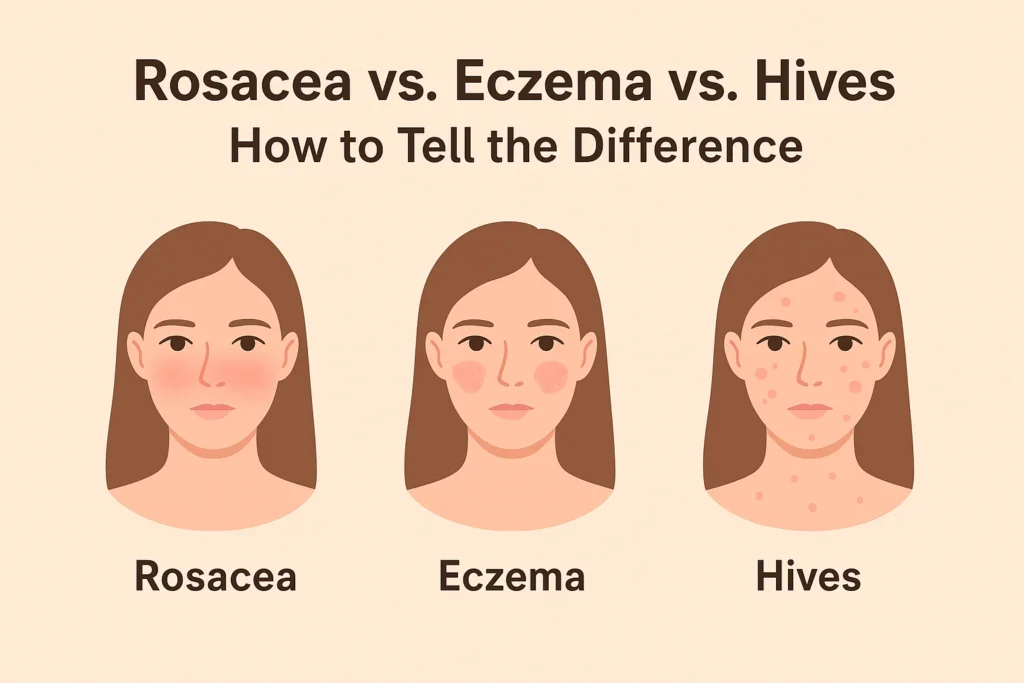
Skin Conditions Explained: Rosacea vs Eczema vs Hives


You’re standing in front of the bathroom mirror, frustrated and confused. Your skin is red, irritated, and driving you crazy – but what exactly are you dealing with? If you’re like most of my patients, you’ve probably spent hours googling symptoms, trying to figure out whether that angry-looking rash is rosacea, eczema, or hives.

Here’s the thing: these three conditions love to masquerade as each other. I see patients every week at OC MedDerm in Irvine, CA, who’ve been treating the wrong condition for months because they look so similar. But once you know what to look for, the differences become much clearer.

Let me walk you through exactly how to tell them apart, what’s causing your skin to act up, and most importantly – what you can do about it.

Why Your Skin Keeps Getting Confused for Something Else

Before we dive into the specifics, let’s talk about why these conditions are such master impersonators. Eczema and rosacea are two of the most common chronic inflammatory skin conditions in the U.S. These disorders both cause red, irritated skin – and hives can throw another curveball into the mix with their own version of red, raised irritation.

The confusion is completely understandable. All three can make your skin look angry, feel uncomfortable, and leave you wondering if you’re using the wrong skincare products or if there’s something more serious going on.

But here’s what I want you to remember: getting the right diagnosis isn’t just about satisfying your curiosity. Each condition needs a completely different treatment approach. Using rosacea treatments on eczema (or vice versa) can actually make things worse.

The Tell-Tale Signs: How to Spot Each Condition

Rosacea: The Face-Focused Troublemaker

Rosacea is a common skin condition that causes redness and bumps on your face, most often on your nose, cheeks and forehead. If I had to pick one key identifier for rosacea, it’s location, location, location.

Rosacea has a very specific calling card – it loves the center of your face. Rosacea is typically localised to the centre of the face, particularly around the nose, whereas eczema can occur anywhere on the body. We’re talking about your nose, cheeks, forehead, and chin. It’s usually symmetrical too, so if your left cheek is red, your right cheek probably is too.

Here’s what rosacea looks like when it shows up:

The redness never really goes away. Unlike a temporary flush from exercise or embarrassment, rosacea gives you persistent redness that sticks around. Some of my patients describe it as looking like they have a permanent sunburn on the center of their face.

You might see tiny blood vessels. These spider-like vessels (we call them telangiectasias) become visible through your skin, especially on your nose and cheeks.

Bumps that aren’t quite pimples. Rosacea can create papules and pustules that look similar to acne, but they’re not the same thing. They tend to be more tender and don’t respond to typical acne treatments.

Your eyes might get involved. About half of people with rosacea also experience eye symptoms – redness, dryness, or a gritty feeling.

Eczema: The Itchy Overachiever

If rosacea is the face-focused condition, eczema is the overachiever that can show up literally anywhere on your body. Eczema usually causes dry, itchy, and scaly skin patches that last for a few days, but honestly, it can stick around much longer than that.

The hallmark of eczema is the itch. I’m not talking about a mild irritation – I’m talking about the kind of itch that wakes you up at night and makes you want to scratch until you bleed.

Here’s how to recognize eczema:

It loves skin folds. Eczema has favorite hangout spots – the insides of your elbows, behind your knees, on your wrists, and around your neck. On the face, it often appears around the eyes and mouth.

The skin looks dry and scaly. While rosacea tends to look flushed and inflamed, eczema often makes your skin look like it desperately needs moisture. It can appear thick, leathery, or flaky.

It comes and goes in flares. Eczema isn’t usually a constant presence like rosacea. It tends to flare up for days or weeks, then calm down, then flare again.

It can weep or crust over. In severe cases, eczema patches might develop small blisters that break open and form crusts – something you don’t typically see with rosacea.

Hives: The Quick-Change Artist

Now, hives are the wild card in this trio. Unlike the chronicity associated with eczema, hives are characterized by their transient nature, with raised red welts appearing and disappearing within hours.

If you’re dealing with hives, here’s what you’ll notice:

They appear suddenly and change quickly. You might wake up fine and by lunchtime have raised, red welts all over your arms. Or you might have a hive on your back that’s gone by evening but replaced by new ones on your legs.

They’re raised and often round or oval. Urticaria, or hives, presents as red, swollen welts that can quickly emerge and vanish across various body areas. These aren’t flat red patches – they’re raised bumps that you can feel with your finger.

They can appear anywhere. Unlike rosacea’s face preference or eczema’s love for skin folds, hives don’t discriminate. They can pop up anywhere on your body.

They’re usually very itchy. The itch from hives is different from eczema – it’s more of an immediate, urgent sensation rather than the chronic, gnawing itch of eczema.

What’s Actually Causing Your Skin to Act Up?

Understanding what triggers each condition can help you not only identify what you’re dealing with but also prevent future flare-ups.

Rosacea Triggers: The Usual Suspects

Rosacea triggers are surprisingly personal – what sets off your neighbor’s rosacea might not affect you at all. But there are some common culprits I see over and over:

Sun exposure is the biggest trigger for most people. Even brief exposure can cause a flare that lasts for days.

Heat in any form – hot showers, saunas, hot beverages, or even just a warm day can trigger flushing.

Spicy foods and alcohol are notorious for causing rosacea flares. Red wine is particularly problematic for many patients.

Stress can absolutely trigger rosacea. I’ve had patients whose rosacea flares every time they have a big presentation at work.

Certain skincare ingredients can be problematic. Fragrances, alcohol-based toners, and harsh exfoliants are common offenders.

Eczema Triggers: It’s Complicated

Eczema triggers are often a combination of internal and external factors:

Genetics play a huge role. If your parents had eczema, asthma, or seasonal allergies, you’re more likely to develop eczema too.

Environmental allergens like dust mites, pet dander, pollen, or mold can trigger flares.

Irritants including harsh soaps, detergents, fragrances, and even certain fabrics can cause problems.

Food allergies sometimes play a role, especially in children. Common culprits include milk, eggs, nuts, and soy.

Stress and hormonal changes can definitely trigger eczema flares.

Weather changes – both very dry conditions and excessive humidity can be problematic.

Hives Triggers: The Allergy Connection

They frequently develop from an allergic reaction to food, medicine, or other allergens and might appear unexpectedly.

Food allergies are a major cause. Shellfish, nuts, eggs, and dairy are common culprits, but any food can potentially cause hives.

Medications – antibiotics, pain relievers, and blood pressure medications are frequent causes.

Physical triggers like pressure from tight clothing, temperature changes, sunlight, or even exercise can cause hives in some people.

Infections – viral infections, in particular, can trigger hives, especially in children.

Stress can absolutely cause hives, though it’s often a combination of stress plus another trigger.

The Diagnosis Dilemma: Why You Need Professional Help

Here’s something that might surprise you: Rosacea is sometimes confused with other conditions because its signs and symptoms can appear so similar, and a diagnosis by a dermatologist is essential.

Even as a dermatologist with years of experience, I sometimes need to take a careful history, examine the skin closely, and occasionally run tests to make the right diagnosis. Self-diagnosis based on internet photos can lead you down the wrong treatment path for months.

I had a patient recently who was convinced she had rosacea because her cheeks were always red. She’d been using gentle, fragrance-free products and avoiding all her favorite spicy foods for six months. When I examined her, it was clear she actually had eczema – and she’d been avoiding treatments that could have helped her while restricting her diet unnecessarily.

When You Absolutely Need to See a Doctor

Some situations require immediate professional attention:

If hives are accompanied by difficulty breathing, swallowing problems, or facial swelling – this could be anaphylaxis, which is a medical emergency.

If you have widespread, severe eczema that’s interfering with your sleep or daily activities.

If your skin shows signs of infection – increased warmth, pus, red streaking, or fever.

If over-the-counter treatments aren’t helping after a few weeks.

If you’re not sure what you’re dealing with – better to get it right from the start than waste time and money on the wrong treatments.

Treatment Approaches: What Actually Works

The frustrating truth is that there’s no one-size-fits-all treatment for any of these conditions. What works depends on your specific triggers, the severity of your symptoms, and how your skin responds to different approaches.

Rosacea Treatment: Gentle but Persistent

For rosacea, we focus on reducing inflammation and avoiding triggers:

Topical treatments like metronidazole gel are often first-line treatments. These prescription medications can significantly reduce redness and bumps over time.

Oral antibiotics might be necessary for moderate to severe cases. We use them more for their anti-inflammatory properties than their antibiotic effects.

Laser and light therapies can be incredibly effective for reducing visible blood vessels and persistent redness.

Gentle skincare is crucial. I recommend mineral sunscreen daily, fragrance-free cleansers, and moisturizers designed for sensitive skin.

Eczema Treatment: Moisture and Management

Eczema treatment is all about restoring the skin barrier and controlling inflammation:

Moisturizing is non-negotiable. I tell patients to apply a thick, fragrance-free moisturizer while their skin is still damp from showering.

Topical corticosteroids are often necessary during flares to reduce inflammation and itching.

Prescription non-steroidal options like calcineurin inhibitors can be great for sensitive areas like the face.

Identifying and avoiding triggers is crucial for long-term management.

For severe cases, we have newer biological treatments that can be life-changing for people who haven’t responded to other therapies.

Hives Treatment: Stop the Reaction

Antihistamines are typically effective for relief. For hives, the approach depends on whether they’re acute or chronic:

Antihistamines are the first line of defense. Both over-the-counter and prescription options can be effective.

Avoiding known triggers is essential, though sometimes we need to do detective work to figure out what those triggers are.

For chronic hives, we might need stronger medications like oral corticosteroids or other immune-modulating treatments.

Cool compresses and loose clothing can provide comfort during flares.

Your Daily Management Strategy

Regardless of which condition you’re dealing with, there are some universal principles that can help:

The Universal Skincare Rules

Less is more. Complicated skincare routines with multiple active ingredients are often more harmful than helpful for irritated skin.

Fragrance-free everything. This includes your laundry detergent, soap, shampoo, and skincare products.

Lukewarm water only. Hot water strips your skin’s natural oils and can trigger flares in all three conditions.

Pat, don’t rub. Whether you’re drying off after a shower or applying moisturizer, gentle patting motions are less irritating than rubbing.

The Trigger Detective Work

Start keeping a simple diary of your symptoms. Note:

  • What your skin looked like when you woke up
  • Any new products you used
  • What you ate
  • Stress levels
  • Weather conditions
  • How your skin looked at bedtime

After a few weeks, patterns often emerge that can help you identify your personal triggers.

The Stress Connection

All three conditions can be worsened by stress, and having a skin condition is inherently stressful – it’s a frustrating cycle. Finding healthy ways to manage stress (exercise, meditation, therapy, hobbies) isn’t just good for your mental health; it’s good for your skin too.

What Not to Do: Common Mistakes That Make Things Worse

In my years of practice, I’ve seen patients make the same mistakes over and over. Here are the big ones to avoid:

Don’t try to treat suspected rosacea with acne products. Benzoyl peroxide and salicylic acid can make rosacea significantly worse.

Don’t over-moisturize eczema with heavy, greasy products. While moisturizing is crucial, using products that are too heavy can sometimes trap heat and make itching worse.

Don’t ignore chronic hives. If you’re getting hives regularly for more than six weeks, there might be an underlying cause that needs investigation.

Don’t rely on home remedies without medical guidance. Essential oils, DIY masks, and internet cure-alls can often make skin conditions worse.

Don’t stop treatment too early. Many of these conditions require consistent, long-term management. Stopping treatment as soon as you see improvement often leads to rebound flares.

When to Worry: Red Flags That Need Immediate Attention

Most skin conditions are frustrating rather than dangerous, but there are some warning signs that require urgent medical attention:

  • Difficulty breathing or swallowing (especially with hives)
  • Facial swelling, particularly around the eyes or mouth
  • Signs of skin infection (pus, red streaking, fever)
  • Severe, widespread rash that appears suddenly
  • Any skin condition that’s interfering significantly with your sleep or daily activities

The Bottom Line: You Don’t Have to Suffer

Here’s what I want you to remember: chronic skin conditions are incredibly common, they’re not your fault, and they’re definitely treatable. According to the American College of Allergy, Asthma and Immunology, 20% of people will experience hives at some point in their lives. You’re not alone in dealing with these frustrating skin issues.

The key is getting the right diagnosis and the right treatment plan. What works for your friend’s eczema might not work for your rosacea. What cleared up your hives last time might not be the right approach if they come back.

Don’t spend months or years being frustrated with treatments that aren’t working. Professional evaluation can save you time, money, and a lot of unnecessary discomfort.

Ready to Get Answers About Your Skin?

If you’re tired of playing the guessing game with your skin condition, it’s time to get some professional insight. Every day you wait is another day of potential discomfort and possibly using the wrong treatments.

I’ve seen countless patients find relief once they finally got the right diagnosis and treatment plan. Whether you’re dealing with the persistent redness of rosacea, the maddening itch of eczema, or the unpredictable nature of hives, there are effective treatments available.

Don’t let uncertainty keep you from getting the help you need. Schedule a consultation today and let’s figure out exactly what’s going on with your skin – and more importantly, how to fix it.

Ready to stop guessing and start getting results? Contact us at +1(949) 551-1113  or visit to schedule your appointment at OC MedDerm in Irvine, Orange County, CA. Your skin deserves expert care, and you deserve to feel confident and comfortable again.